


As a teenager, each time I crossed the boundaries of good behaviour, my father would remind me of the saying, ‘With freedom, comes responsibility.’ Liberty has an inseparable second half — that of being held accountable for actions. And the balance between these two seemingly opposite ideas inevitably comes with tension. This applies to how we view ‘freedom of expression’ too, including using visual arts as a tool to communicate.
There have been several instances in the past when works of art have been censored by authorities for not following the legal or moral code. In 1954, modernist Akbar Padamsee fought a court case, in which he was acquitted. Padamsee, then 26, was charged under section 292 of the Indian Penal Code for two artworks — Lovers 1 and Lovers 2 — which were exhibited in his debut show at the Jehangir Art Gallery in Mumbai. The paintings showed a man’s hand on a woman’s breast. The instinctive expression of love on canvas was labelled as obscene and seized by the police. More recently, the Bombay High Court restrained the Customs department last October from destroying, yet again, paintings by Padamsee (and a few by F.N. Souza), stating, “Not every nude painting is obscene.”
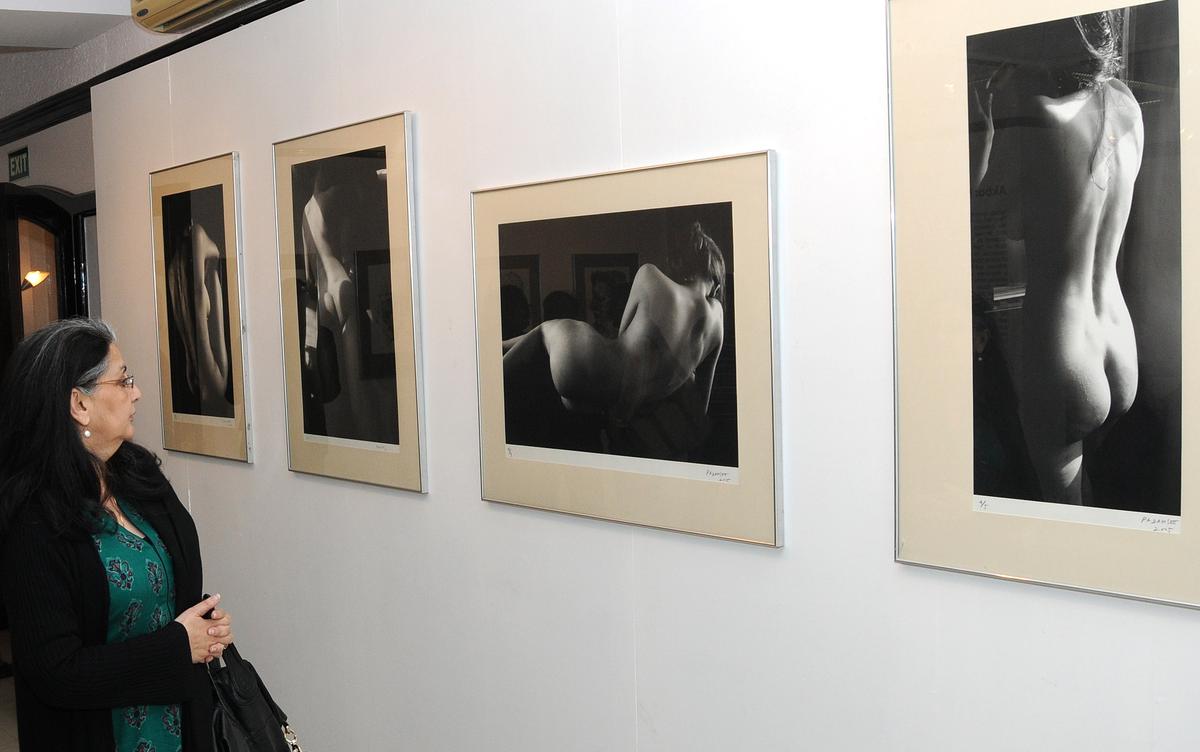
An exhibition of sketches by Akbar Padamsee
| Photo Credit:
Shanker Chakravarty
The words didn’t carry across state borders, though. In January this year, a Delhi court ordered the seizure of two of M.F. Husain’s paintings exhibited at DAG (formerly the Delhi Art Gallery), after allegations that they obscenely portrayed Hindu deities and hurt religious sentiments. Though the court later dismissed the plea seeking the registration of a first information report against the gallery, for lack of evidence, it kicked off discussions on censorship and where the line must be drawn. And as expected, the opinions have been varied and divided.
Restrictions vs. no boundaries
Freedom of expression is a fundamental human right, and it enables creative practices to serve as social commentary. But as Debottam Bose, a practising art lawyer, explains, “No society permits completely unrestricted speech because unchecked expression can lead to chaos, harm, and the erosion of other fundamental rights. Hate speech, incitement to violence, defamation, and false propaganda can inflict real damage. Therefore, most legal systems impose certain restrictions on expression, ensuring that its exercise does not infringe on the rights and safety of others.”
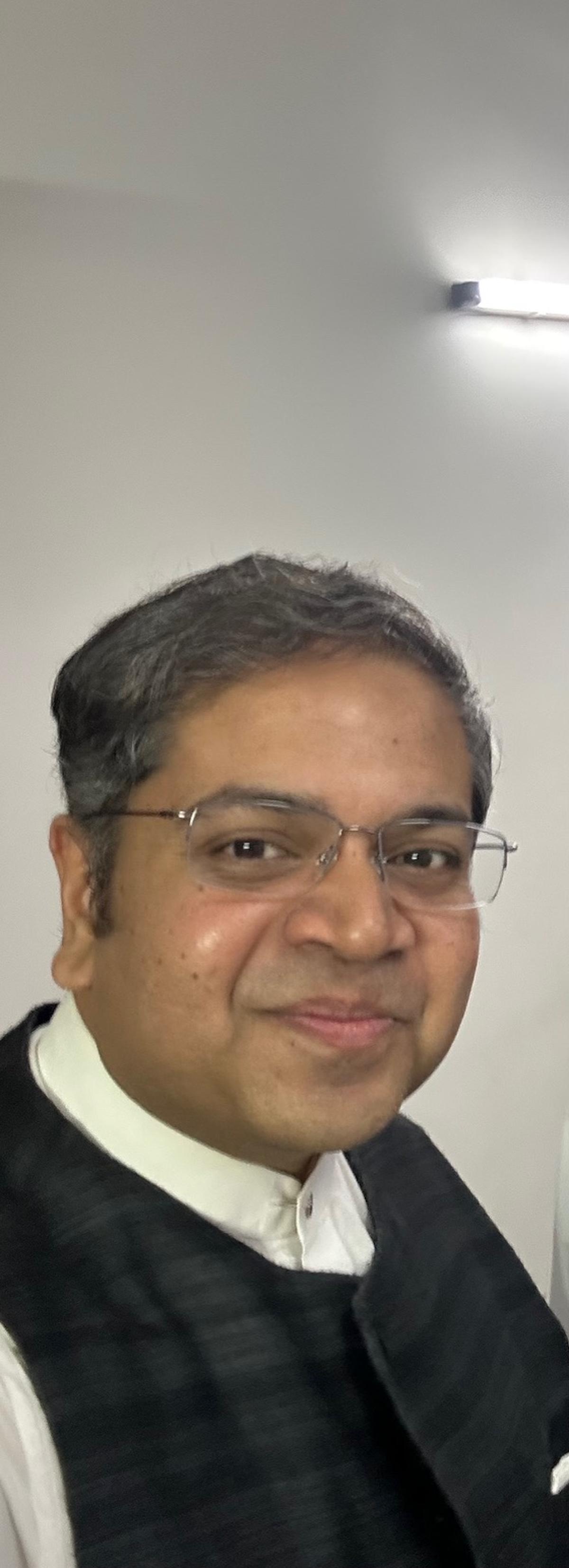
Debottam Bose
But not everyone agrees with restrictions being imposed. Peter Nagy, co-founder and director of Nature Morte gallery, takes a contrarian view. “There should not be any boundaries to expression,” he says. “Censorship should never happen, and if an artist or institution exhibiting a work of art has as its mission to insult or aggravate people, then so be it. Let the chips fall as they may.” He feels since everything that is viewed by the masses is controlled by someone, it is the duty of artists to expose and re-examine the errors and blind spots of history.
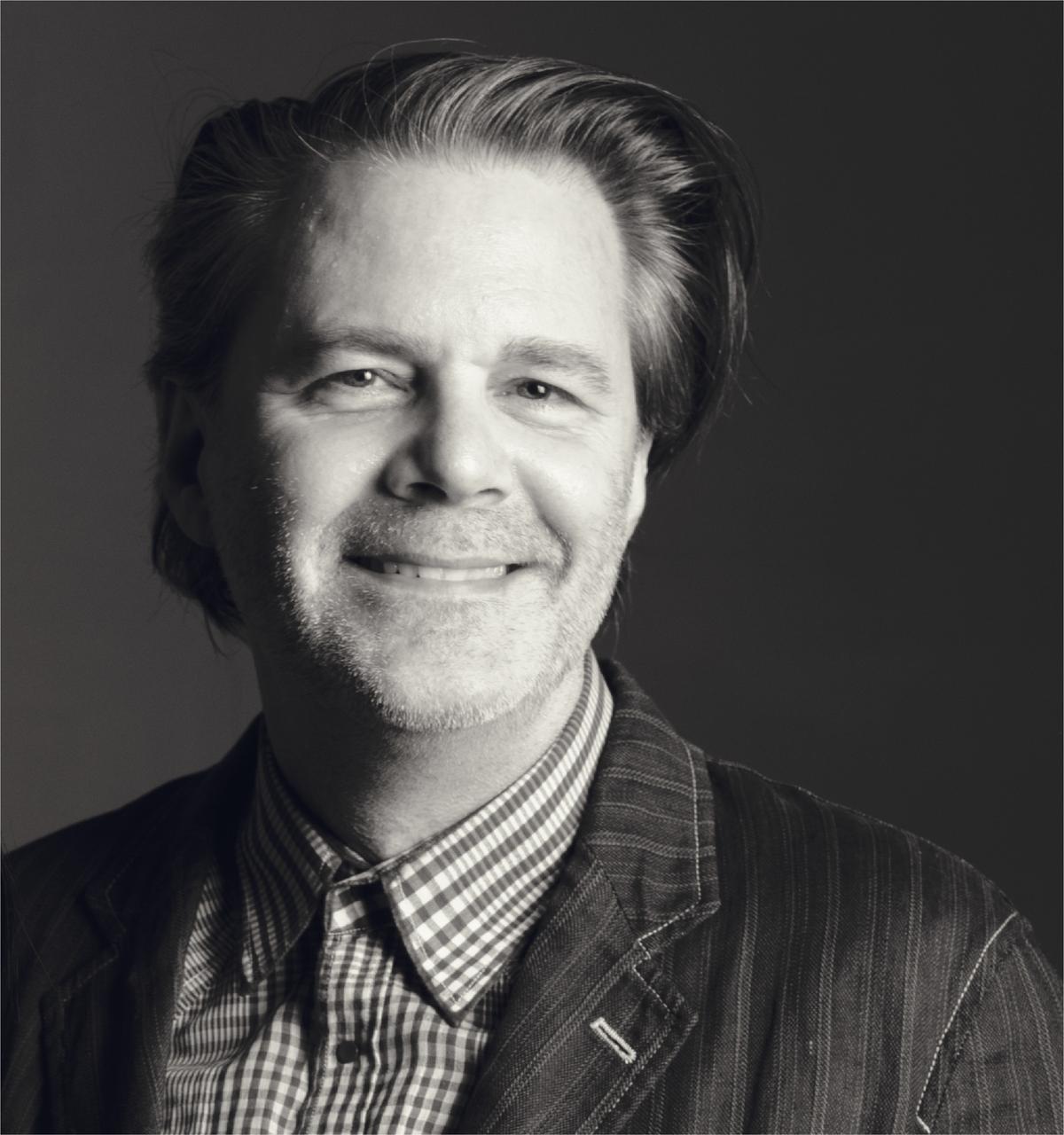
Peter Nagy
The debate isn’t restricted to these binaries, either. Some believe that if the purpose of art is to communicate, then the exercise becomes futile if the audience is alienated. “Art must question our pre-disposition and proclivities of histories, but must maintain a constructive alignment and not disrupt it so the whole exercise is lost,” says Anubhav Nath, founder of Ojas Art, which provides a platform for indigenous visual art. “There is the risk of art getting reduced to shock and sensationalism, which becomes counter-intuitive to its purposes.” An idea Bose concurs with. Freedom of expression is most effective when accompanied by responsibility, ensuring that voices are heard, but not at the cost of justice, dignity, or peace.
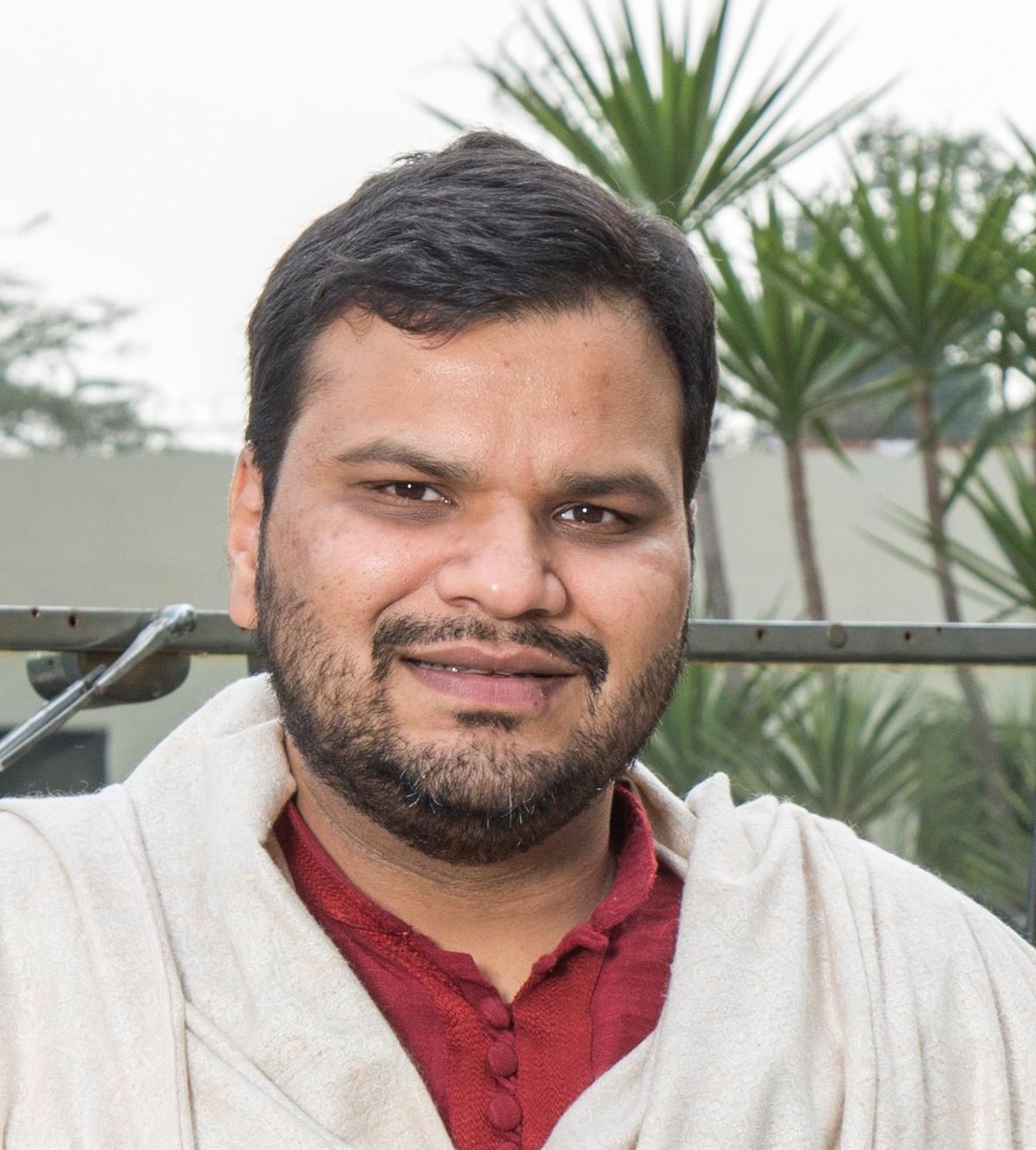
Anubhav Nath
Rejection and acceptance are integral
The challenge, however, lies in determining who decides what is harmful and what is merely controversial. This is not the first time Husain’s paintings are being pulled up. In 1996, his painting of a nude goddess Saraswati became the target of protests. In 2008, the Supreme Court shot down a petition seeking an initiation of proceedings against the artist for hurting the sentiments of Indians, and ruled that his work, Bharat Mata — which depicted a nude female figuration of India’s map — was not obscene, pointing out that the Khajuraho temples and other sites also have nudity.
“The recent court order to seize his paintings raises the concern that legal instruments meant to protect public order are often wielded to enforce cultural and political conformity rather than to prevent actual harm,” says Bose. While we have the right to be offended by something, we cannot take public actions that violate the spirit of expression. “If you are offended by a book, film, or work of art, don’t read, view or go to see it,” shares Ashish Anand, CEO and MD of DAG, which is at the centre of the current controversy. “We must not forget that even scientific discoveries have offended many in the past. The best we can do is to keep an open mind even when we do not like or agree with something.”

“Times change, histories change, perceptions change, and with them facts [as we know them]. Artists and writers present their views at a given point in time, which depict their perceptions of things.”Ashish AnandCEO and MD of DAG
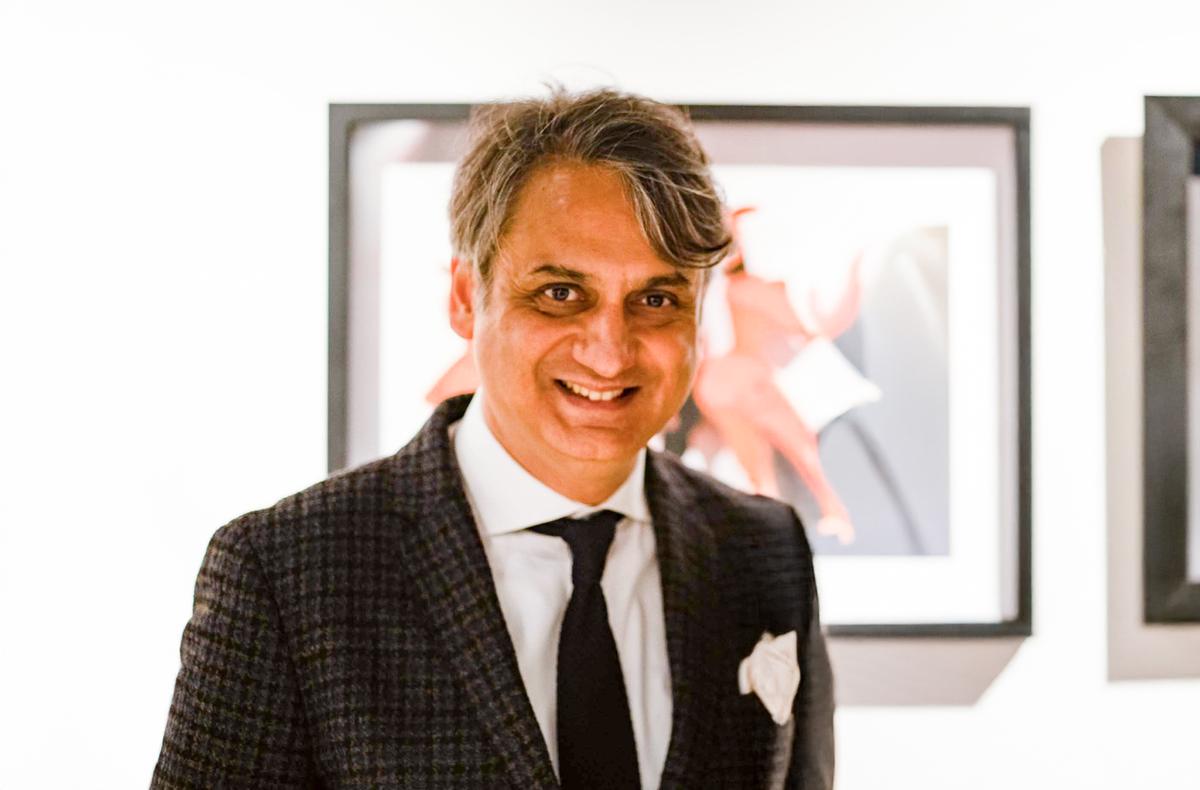
Ashish Anand
Viewed more broadly, everyone is at liberty to act as they want — to express and to protest said expressions. “This is the nature of culture in the public arena and is part of a free and democratic society,” says Nagy. “These disagreements are perfectly healthy.” The arts do not work in the template of absolutes. Rejection and acceptance are integral aspects in allowing for constructive conversations and deliberations. It should not, however, inevitably translate into censorship.
For the sake of sensationalism
There have been opinions that Husain often resorted to making art purely to provoke, and thus remain in the news. When sensationalism is used for shock value without substantive engagement with the issue at hand, it risks becoming a hollow exercise in self-promotion. “There is no doubt that some artists deliberately create controversy to capture public attention. But sensationalism, when used effectively, can amplify important messages and force society to confront issues it might otherwise ignore,” says Bose. “Artists like Banksy, Ai Weiwei, and Zehra Doğan have used provocative imagery to highlight oppression, war, and state censorship.”
Does an artist have a duty to ensure their work contributes constructively to public discourse rather than merely inciting outrage? The answer is complex — while an artist is expected to freely express their deepest personal emotions, being part of a larger society, they also have a responsibility towards others. “The seizure of Husain’s paintings demonstrates how legal and political mechanisms can be weaponised to suppress artistic freedom rather than foster discussion. If one individual’s complaint can lead to the removal of artwork, it sets a precedent where any controversial expression is at risk of being silenced,” concludes Bose.
The Delhi-based culture writer is a practising artist and curator.
Published – February 14, 2025 11:31 am IST