


Like a Bollywood potboiler, the plot of the National Film Awards gets thicker with each passing year. Why did the jury pick the polarising narrative of The Kerala Story for two awards? Why did the jury wake up to the talent of Shah Rukh Khan after 33 years?
The Kerala Story courted controversy for its portrayal of women in Kerala being forcefully converted and recruited by the Islamic State. While those who questioned the decision of bestowing the best director to Sudipto Sen argued that the film pandered to “majoritarian propaganda with a hate-filled agenda disguised as cinema,” Ashutosh Gowarikar, the head of the jury, felt Sen conveyed a “difficult topic with clarity”, with deep research into events that must have happened.

The Supreme Court mandated disclaimer for the film stated that it is a “fictionalised account of events” and that there is no “authentic data” to support the claim that 32,000 women were converted to Islam in Kerala, but the makers have reiterated that the film is based on real events and “is not based on isolated or imagined incidents.”
While the government of India presents the National Film Awards, they don’t necessarily represent a singular government view on cinema. They are aimed at recognising and celebrating cinematic excellence across languages and genres, promoting unity and integrity through the appreciation of different cultures.
However, increasingly, the National Film Awards are seen as a platform to endorse those who are taking the ruling dispensation’s line of thought to the audience. A significant chunk of the audience votes for the BJP. It makes business sense for the film producers to give their political thoughts and social fears a cultural context. Besides, it provides soft power to the spin doctors to set the narrative on social media. Drab WhatsApp forwards get livened up with persuasive visuals. One of the cinematic devices to create fear or hate for a group of people is by crafting a narrative that says, ‘the other is after our women.’

At different points in cinematic history, it has been effectively used in creating a social narrative against African Americans and Jews. If a section of the Hindi film audience feels that Kerala is reeling under the so-called ‘Love Jihad’, then, even if the numbers are exaggerated and the craft is underwhelming, the emotional impact of The Kerala Story is substantial.
When The Kashmir Files bagged the Nargis Dutt Award for Best Feature Film on National Integration in 2021, many felt they were living in an alternate reality because in the past, films like Garm Hava, Tamas, and Dharm had won this prestigious honour whose name has now been changed to Best Feature Film Promoting National, Social and Environmental Values. However, when put into context, the award appears to be in line with the present government’s policy on Kashmir, where the abrogation of Article 370 is seen as aligning with its concept of national integration.
Put in perspective, the jury’s nod for The Kerala Story doesn’t come as a surprise. Like The Kashmir Files, The Kerala Story has been openly backed by the top leadership of the BJP. It was declared tax-free in BJP-ruled states. Like the story of forced conversion depicted in the film, it appears to be a tool to brainwash the audience into believing a one-sided narrative.
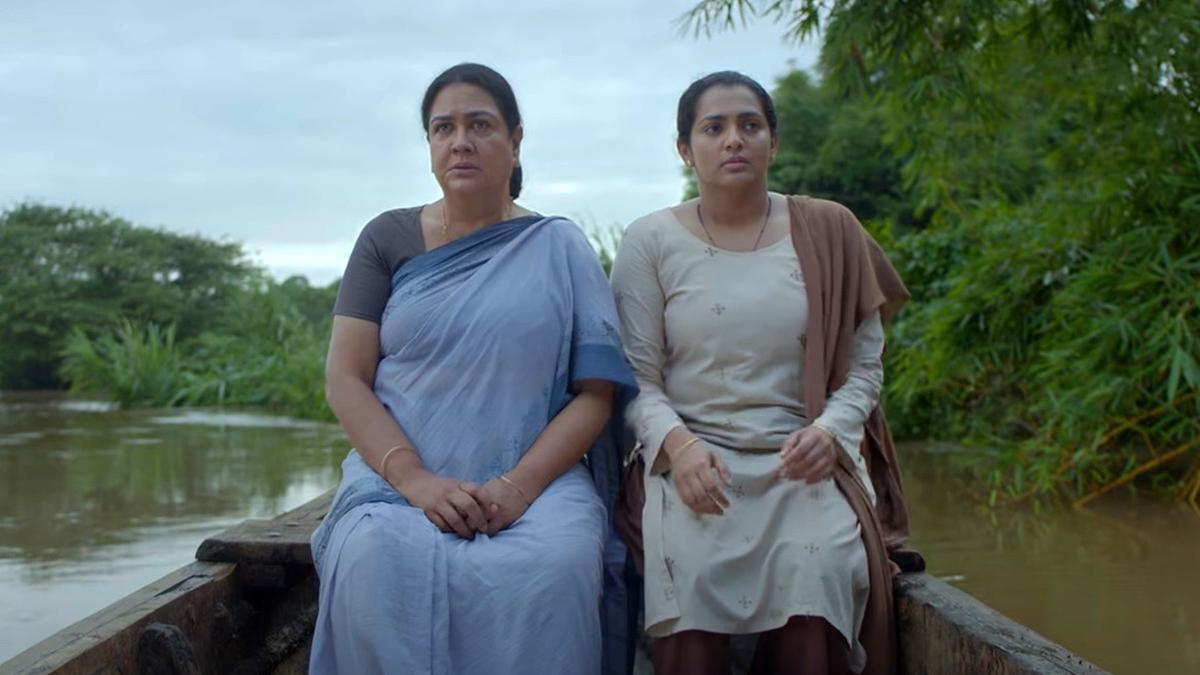
Urvashi (left) won the Best Supporting Actress award for her performance in ‘Ullozhukku’.
| Photo Credit:
Special Arrangement
The movie doesn’t question the Islamic State’s silence on the Palestine question. While the makers claim they are not Islamophobes, they use creative licence to target Islam by presenting it as a religion, whose very value system prepares its followers for extremist ideas. Ostensibly, dramatising the WhatsApp forwards, the film sees a sinister intent in every Hindu-Muslim interaction.
Gowarikar reportedly considers box office performance, social impact, and reach when deciding the winner. Of course, there are films and performances where artistic merit, social impact, and popular appeal truly come together. This year, we have 12th Fail, where Vidhu Vinod Chopra and Vikrant Massey conjure up this rare meeting of accessibility and craftsmanship, where Atal Bihari Vajapyee’s haar nahin manoonga, raar nahin thanooga (won’t give up, won’t hold grudge) is aesthetically integrated into the storyline as an anathema to social inequities.
However, when it comes to choosing between artistic merit and box office numbers, common sense suggests that the jury should prioritize the former.
ALSO READ: ‘Ullozhukku’ movie review: Urvashi’s powerhouse performance carries this haunting drama
The National Film Awards are not new to public scrutiny, but during the Congress rule or Congress-supported governments, the controversies were less about explicit political propaganda and more about systemic issues, such as nepotism, jury bias, and a lack of transparency. In 1976, during a period of intense political turmoil, Mrinal Sen’s Mrigaaya won the National Film Award. A stark critique of Capitalist power during the Emergency, Utpalendu Chakraborty’s Chokh won the best film award in 1982, and G.V. Iyer’s Sanskrit biopic of Adi Shankaracharya bagged it the following year.
Over the years, the distinction between the best film and the best film offering wholesome entertainment has become increasingly blurred. This year again, critically acclaimed films like Joram and Three of Us could not impress the jury.
The criteria behind nominating an actor in a particular category have also been questioned. Seasoned actors Urvashi and Vijayaraghavan have been honoured with best actor in supporting role for Ullozhukku and Pookkaalam, but in the Kerala Film Critics Awards Vijayaraghavan won the best actor award while Urvashi bagged the best actress award in the Kerala State Film Awards for the same performance.
More importantly, the jury often tilts towards the stature of the actor rather than his immediate performance. A link is usually drawn between the head of the jury and the actor. Ajay Devgn won the nod for Zakhm when Prakash Jha headed the jury. Ramesh Sippy led the jury when Amitabh Bachchan was selected for Paa and Piku, and Priyadarshan was at the helm when Akshay Kumar won the coveted award for Rustom.
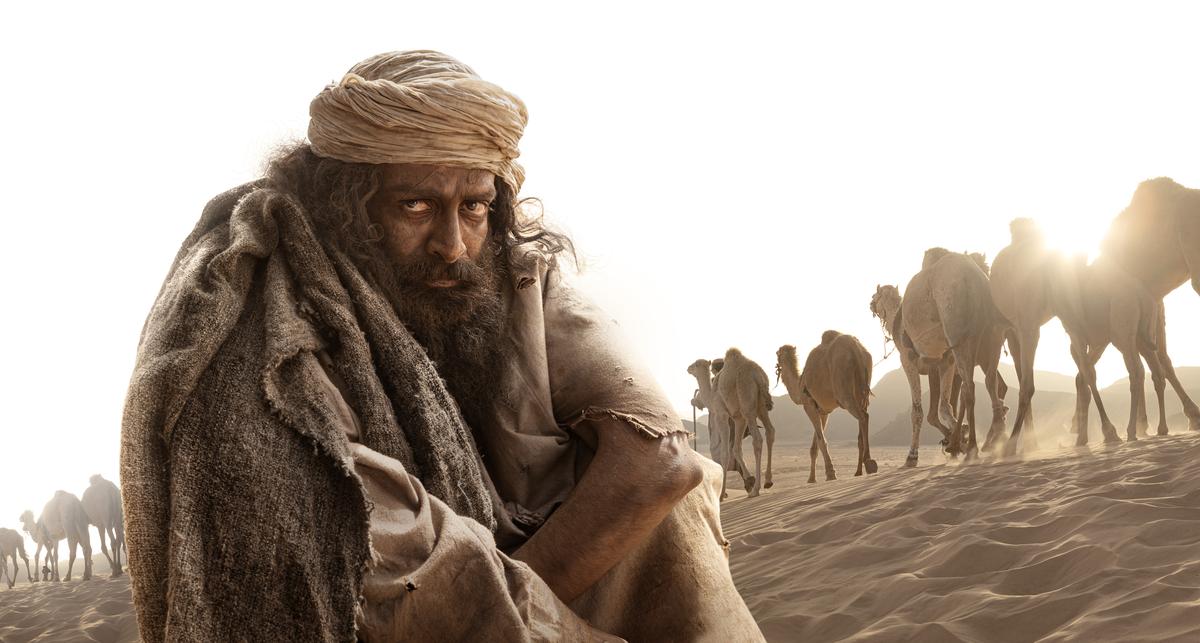
Despite receiving immense praise for his efforts in ‘Aadujeevitham’, Prithviraj Sukumaran missed out on the National Film Awards.
| Photo Credit:
Special Arrangement
Sippy once told this journalist that one can question the choice but should not question the integrity of the jury. So, when Gowarikar announced the name of Shah Rukh, it seemed as if the director was correcting the wrong, as he had been denied the award for Swades, and Saif Ali Khan was surprisingly found more deserving for Hum Tum. It was the time when Sharmila Tagore was at the helm of affairs at the Central Board of Film Certification.
ALSO READ: ‘Jawan’ movie review: Shah Rukh Khan is spectacular in Atlee’s socially-charged thriller
Moreover, if the political messaging of The Kerala Story serves the purpose of the ruling dispensation, the theme of Atlee’s Jawan questions its politics. Shah Rukh plays Azaad, the son of a soldier, Vikram Rathore, who lectures the audience to ask those seeking their votes, “What will they do for you?” Drawing from eminent Urdu poet Waseem Barelvi’s popular couplet, he sings, “Usulon Pe Jahan Aanch Aaye Takrana Zaroori, Banda Zinda Ho to Nazar Aana Zaroori Hai” (When principles are at stake, one must fight. This battle is what keeps you alive).
There are strands of stolen EVMs, false charges against a Muslim doctor, and the villain of the piece is desperate to monetise the country’s natural resources because he feels he can circumvent the democratic process. However, it may be a safer bet than Shah Rukh’s Pathan, which is a little more layered in its depiction of dissent, where the villain is a rogue army man.
Additionally, Jawan appears like a potent option to keep Prithviraj Sukumaran out of contention despite a brilliant turn in Aadujeevitham: The Goat Life. Interestingly, the film questions the practice of slavery in West Asia, where the enslaver and the enslaved person follow the same religion, but, unlike The Kerala Story, director Blessy makes it about humanity rather than a faith. Or, as Urvashi has suggested, Prithiviraj might have been “snubbed due to the Empuraan controversy,” where, as a director, he dug up the ghost of the Gujarat riots. In contrast, Shah Rukh allegedly played a diplomatic role in the national interest without claiming credit. Our films may be losing depth, but our awards continue to follow a layered script!