


Since 2018, the Pickle Factory Dance Foundation has been a ‘holding space’ for the “practice, discourse and presentation of dance and movement work” within unusual spaces in Kolkata. In their just-concluded fifth season, they invited audiences to join them in ‘holding space’ for movement practitioners presenting work that does not subscribe to the modern-day metrics of “faster, higher, stronger”.
The event, spread over three weeks, opened with Luxembourg’s As We Are, a dance company that works at the crossroads between movement and media. They presented Shoot the Cameraman, which blended contemporary dance with live camera-work (choreographed camerapersons) to offer viewers a double-rendering of the work — on stage and projected on screen. This juxtaposing turned on its head the concept of ‘seeing is believing’.
Auroville-based Adishakti bracketed the first weekend of performances, workshops and public engagements with Nimmy Raphael’s Urmila. Through the character of Urmila, the wife of Lakshmana, the play unravels the price women pay for obedience.
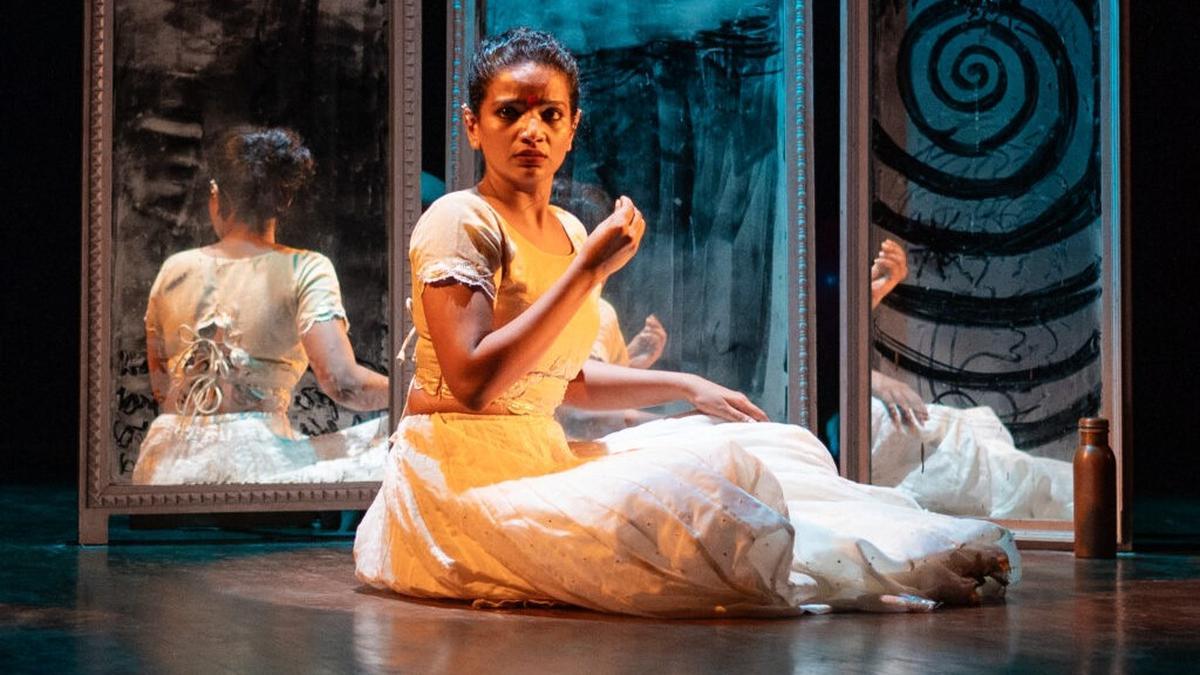
Nimmy Raphael’s Urmila.
The second week focussed on three performing units. Chennai-based choreographer Padmini Chettur’s work was presented through video installations along with solo and group showings; Glasgow-based choreographer-dancer Solene Weinachter’s solo After All, and Swiss duo of the dramaturg Marcel Schwald & choreographer Chris Leuenberger’s devised work Ef_feminity.
Padmini’s video installations displayed at Experimenter were distillations of her on-going choreographic enquiries. In the installation Stilling, several disembodied limbs set off at the same time to create movement engineered by consciously unlocking and locking muscle groups to create rotations. In the live performance version, re-staged across two jail cells and an open courtyard at the Alipore Museum, a former prison, Padmini built on these alphabets. She choreographed phrases and complete sentences of these rotational movements through the permutation of eight dancers’ moving bodies that drew the viewer to pay attention to the smallest movements that domino-ed into larger actions before coiling back into the starting position. In Chalking, a four-channel video-installation created with five dancers from the Toronto-based Anandam Dance Theatre, Padmini’s ability to choreograph the body into a precise instrument that slices and shapes space came to the fore. Her solo, Philosophical Enactment 1, conversed with the late art writer Aveek Sen’s voice and text, to unpack Padmini’s choreographic pursuits, which was backed by long-time collaborator Maarten Visser.
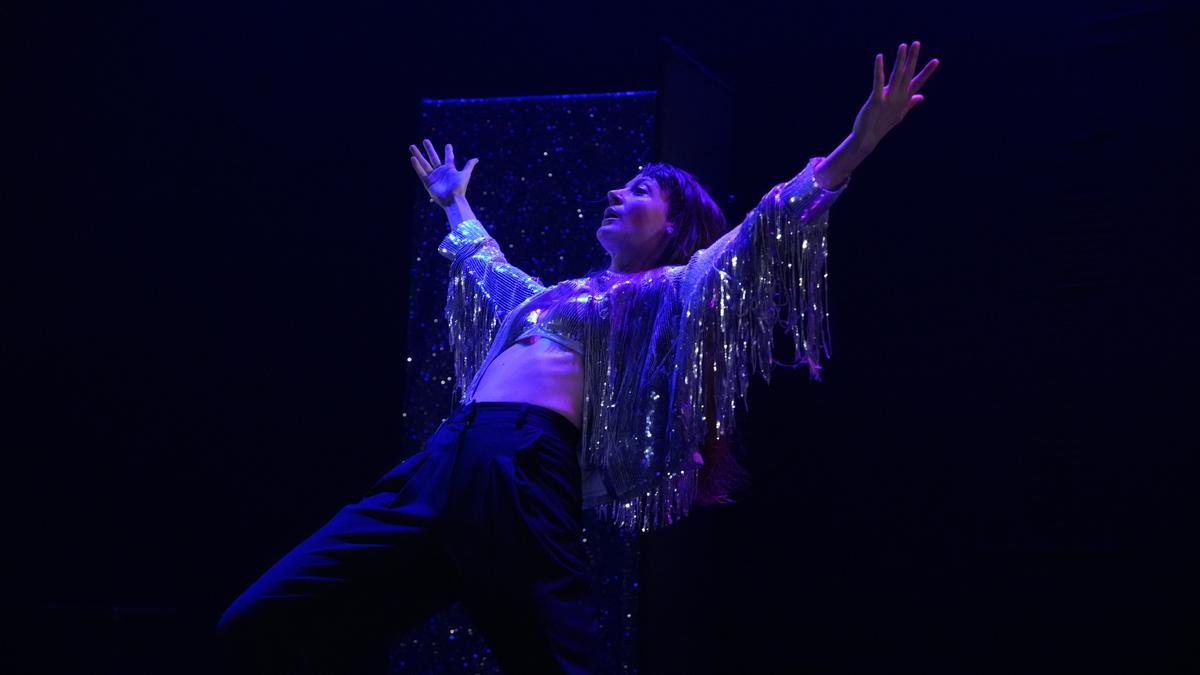
Solene Weinachter’s solo After All
Weinachter’s clever solo After All brought together heartfelt story-telling; fluid, exquisite dance moves and laughter as companions to unravel the concept of grieving. One minute, the audience accompanied her to her uncle’s funeral and the next, they were attendees at hers. One minute, they were stomping their feet to Donna Summer’s disco anthem, ‘I feel love’ and then next, they threw roses at her. Each beat of the humorous or heart-wrenching was delivered with sincerity and each move seemed spontaneous and improvised but it wasn’t. Weinachter subtly, superbly turns up the volume, the energy, the chaos and in the end, we felt like we’d be allowed to mourn a personal loss too. After All was so precisely performed it reminded that grief doesn’t have one shade-card; and viewing dance mined from these deep vaults can be therapeutic or healing but never therapy.
Swiss artists Schwald and Leuenberger worked with contemporary choreographer Diya Naidu, radio personality and actor Shilok Mukkati and theatre practitioner Living Smile Vidya to devise Ef_feminity. This work turned the spotlight on each of the performer’s relationships with notions of being effeminate. Each of the performers’ solos remained siloed, not really in dialogue with each other. One of the elements that did come across was sound – Leuenberger’s sweet voice, Naidu’s guttural screams, Mukkati’s performative panting and Smiley’s piercing laughter. These sounds shattering through the silence of the Alipore Museum reminded one of classist Anne Carson’s essay The Gender of Sound. Besides framing the way that speech and sounds have been gendered, she writes of a Greek festival where women who were generally expected to be silent could say ‘the ugly things’ out loud. But deploying this tool with more knowing might have rendered this work impactful.
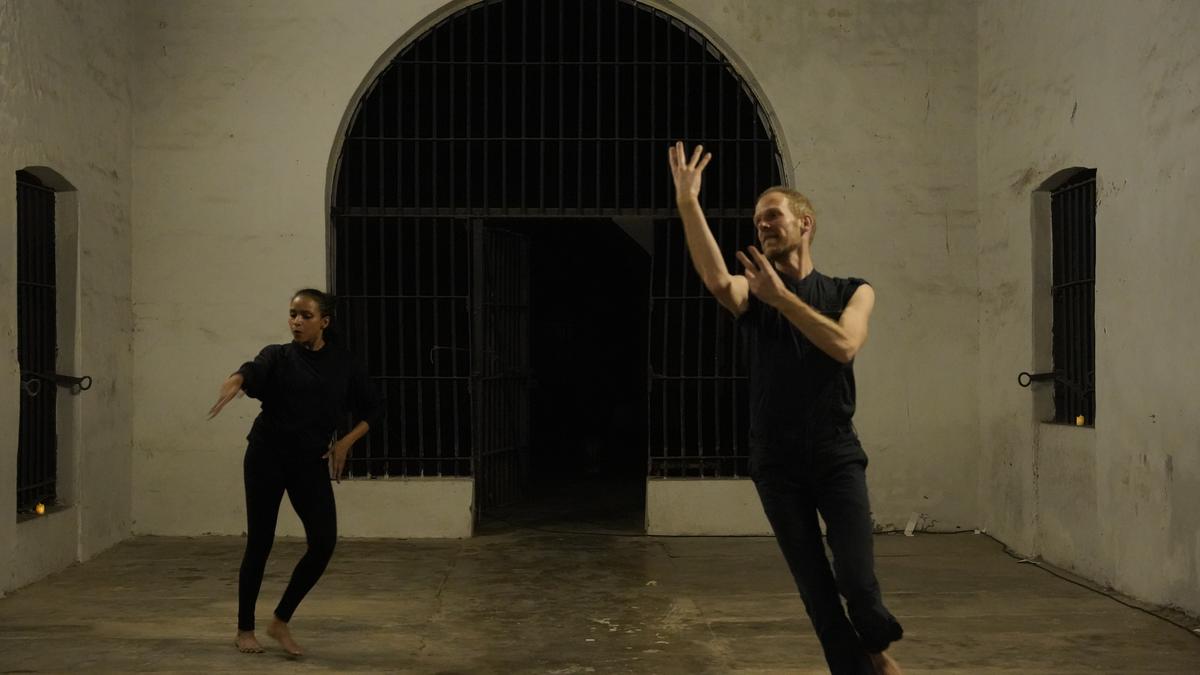
Marcel Schwald and Leuenberger’s Ef_feminity
Pickle Factory’s Fifth Season concluded with Tanzbar Bremen’s Can You Read My Body and Kapila Venu’s Saiva Koothu.
.In curating this set of work, the Pickle Factory Dance Foundation has proved it isn’t a gatekeeper but rather respects success and mis-steps equally, but platforms more than simply effort.
Published – March 14, 2025 05:39 pm IST