


In a hall resonant with reverence, rare echoes from the bygone era of Carnatic music came alive. At Narada Gana Sabha, in the presence of Nalli Kuppuswami Chetti, veteran Carnatic vocalist Trichur V Ramachandran paid a heartfelt tribute to his guru, the inimitable G.N. Balasubramaniam (GNB), on the maestro’s 60th Memorial Day. The event, a lecture-demonstration, became a deeply immersive homage, part historical resurrection, part emotional reminiscence, anchored by archival recordings and personal anecdotes.
Significantly, this was the first time GNB’s rare recordings, painstakingly revived, were presented in a public setting. These were not mere performances; they were windows into the very soul of an artiste who revolutionised Carnatic music.
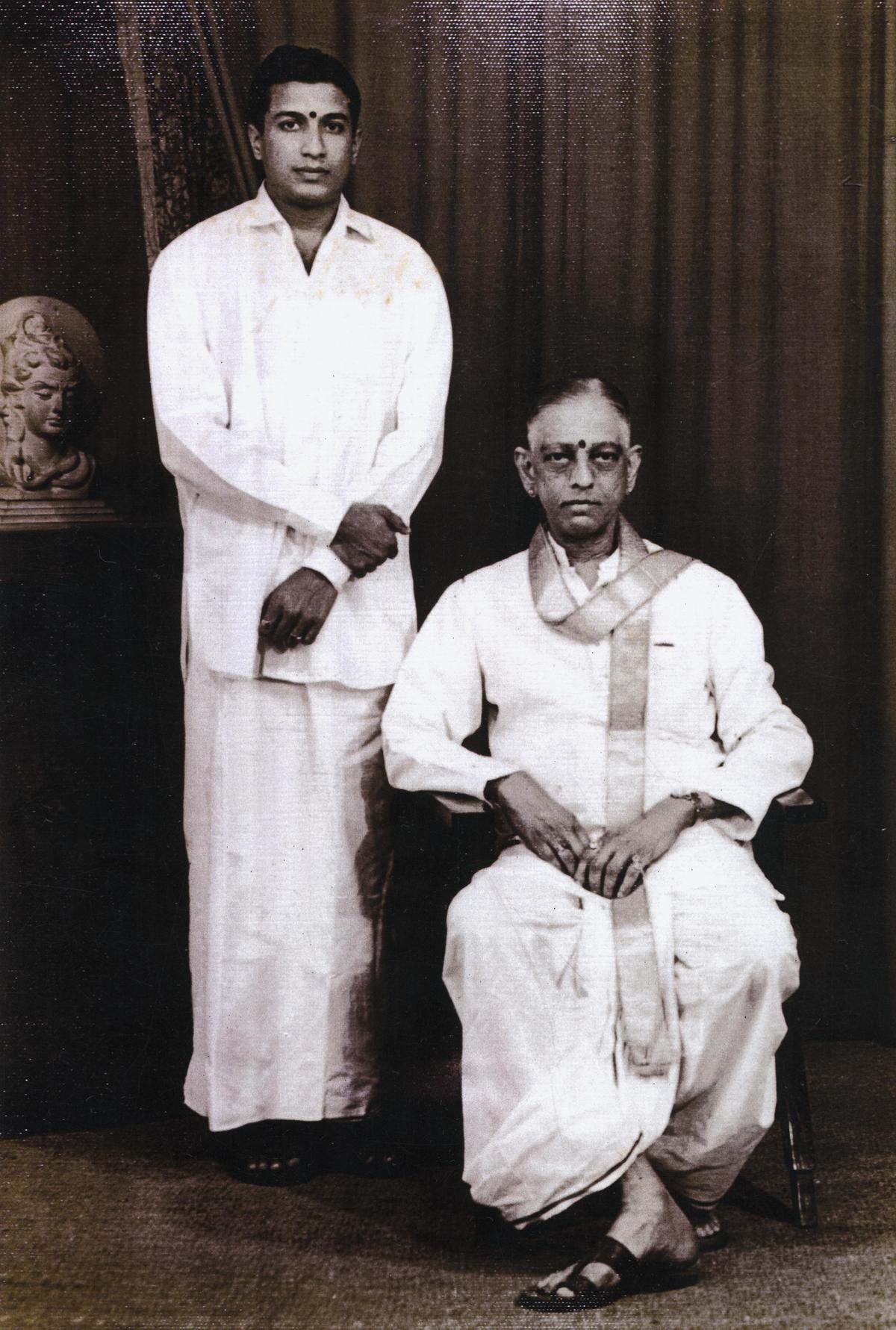
Trichur Ramachandran with his guru GNB
| Photo Credit:
The Hindu Archives
Trichur V Ramachandran opened the evening with a profound declaration: “To me, GNB was Isai Deivam, a musical deity.”
“The last century had many maha vidwans, but GNB came like lightning,” Ramachandran said. ‘As Semmangudi once remarked, he came like a tsunami’. This dramatic arrival shook the conventions of Carnatic music, not by defying tradition, but by illuminating it with unparalleled clarity, voice, and vision.
His saariram (voice), his swarajñānam (intuitive grasp of notes), fearless manodharma, innovative presentations and innate gayaka lakshanam captivated both the scholar and the common rasika.
One story stood out as a glowing testament to GNB’s genius. After listening to the arohanam and avarohanam of raga Gowda Malhar, composed by Muthiah Bhagavatar, GNB came up with such an evocative raga elaboration that the composer, who happened to listen to it, was moved to tears and gifted GNB a tampura and invited him to teach at Annamalai University.
Such was the transformative quality of GNB’s music. It didn’t just adhere to the shastras; it expanded their expressive potential. “Our music is shastriya sangeetham,” said Ramachandran. “GNB stayed true to its core while enlarging its boundaries.”
Hallmark of GNB’s bani
GNB stood at a rare confluence of tradition and innovation. His crystal-clear brigas, delivered at lightning speed, paired with a calm and steady madhyama kala pacing, became the defining hallmark of the ‘GNB bani’. His voice could navigate three octaves with precision, intertwining technical dexterity with emotional depth. He wasn’t just a vocalist. He was a composer, thinker and teacher, who drew Hindustani ragas into the Carnatic fold with elegance. His ragamalikas sparkled with these influences, producing sonic textures that were at once surprising and satisfying.
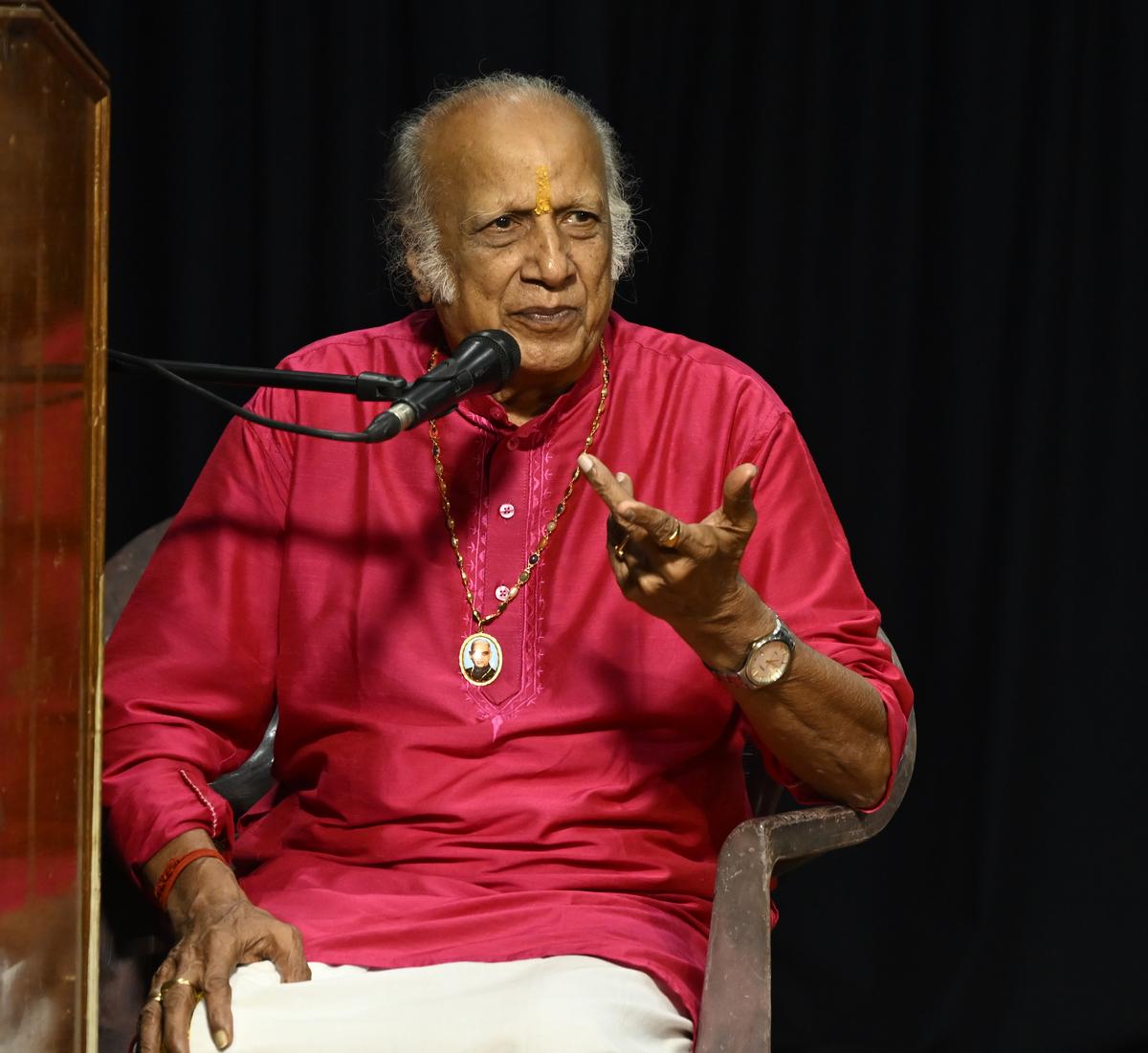
Trichur Ramachandran speaking at GNB Memorial Day organised by him at Narada Gana Sabha mini hall
| Photo Credit:
R. Ragu
In his compositions too, he ventured into unexplored ragas. GNB composed varnams and kritis in rare ragas such as Andolika, Udayaravi Chandrika, Narayani, Malavi, and more.
For GNB, alapana was architecture, not abstraction. His approach flowed through four stages: an initial sweep of the raga, a stepwise development emphasising key notes and gamakas, expansion into the upper registers, and a final return to the raga’s emotive centre. He once told Ramachandran, “When I sing, I see swara devatas. The swaras emerge naturally for me.” His manodharma was intuitive, yet grounded.
The recordings played during the evening were drawn from Mysore, Pudukkottai, and Kolkata, some dating back to the 1940s. The event opened with the dynamic ‘Jaya jaya jaya janaki kantha’ in raga Nattai, with Chowdiah on the violin, setting a majestic tone. This was followed by an alapana in Hindolam that flowed into ‘Samajavaragamana’, with an extraordinary 40 avartanam kalpanaswara that explored every facet of the raga.
A spellbinding Sankarabharanam followed, a masterclass in meditative manodharma. The 1964 Shanmukhapriya recording from Pudukkottai was another gem, showcasing GNB’s application of dashavidha gamakas with mastery.
GNB’s tanam bore his unmistakable stamp — brisk, clear, rhythmically sharp and marked by layajnana and swarasuddham. His gift was not just in the execution but in the revelation.
The evening reached a crescendo with a Bhairavi RTP, where GNB explored melkala brigas and built his improvisation like a sculptor. His traversal of the gandharam, a segment many vocalists avoid, was seamless and inspired.
A rhythmic RTP
From the early 1940s came a Kamboji tanam in trikalam and the Saveri RTP was a rhythmic marvel, weaving together tisra and chatusra nadais with ragamalika swaras and electrifying melkala swaras.
Beyond performance, GNB was a Sri Vidya upasaka. Even in his last days, he called Ramachandran to his side and taught him every shloka and ritual, ensuring the spiritual tradition continued. “He asked me to carry on the puja,” Ramachandran said.
“For the past 15 years, we’ve been organizing this tribute,” said Subashree Ramachandran, vocalist and daughter of Trichur V. Ramachandran.
Legacy is not merely remembered. It is relived, each time music is not just heard, but seen and felt too.
Published – May 13, 2025 02:36 pm IST